
Yashraj Yadav
@yrjdev·Roles I work as: Full-Stack Engineer, AI Systems, Backend & Product.
I build production software end to end, from UI and system architecture to deployment.
TypeScript · Next.js · Node.js · PostgreSQL · RAG & AI systems
- 3+Years shipping
- 2.5M+API req/mo · PixEarn
- 14k+npm downloads · STL
- AI-Powered SaaS
- RAG & Retrieval Systems
- Distributed Backends
- Queue-Based Architectures
- Developer Tools & CLIs
- Creator Platforms
Solandra
An AI customer support platform that answers website visitors from a business's own site and docs, shows the source pages behind each answer, and turns the questions it couldn't answer into a review list for the team.
→ Hybrid retrieval: Qdrant vector search + PostgreSQL full-text
AI Content Automation Platform
An AI content automation platform that turned YouTube transcripts into structured, platform-ready content through a multi-LLM pipeline (GPT, Claude, Gemini) running on background job queues.
→ ~85% fewer tokens per LLM call via schema-based context compression
Creator Marketplace
A creator marketplace for digital art and wallpapers that I designed, built, and ran solo, growing it to 2,200+ creators, 6,000+ artworks, and 15k+ monthly active users before it closed in Aug 2026.
→ 2.5M+ API requests/month at sub-150ms on ~$38/month of infra
Node Abstraction Layer for Composable AI Workflows
A config-driven orchestration system for building composable AI workflows, where all node types are defined as JSON and rendered by a single universal controller.
→ Zero per-node component boilerplate via universal NodeController
I Had the Index. My Query Was Still Timing Out.
A Postgres RPC with the exact right index still threw 57014 statement timeouts at 1.4M calls a day. The index was fine — the predicate wrapped the column in arithmetic and made it unusable.
Your RAG System Is Lying to You: Index Questions, Not Chunks
Standard RAG returned the wrong page with a confident 0.753 score. A version that scored lower — 0.694 — returned the right one. Here's RAG's silent failure mode, why similarity scores can't be trusted, and the fix I shipped as QIndex.
AgentBar
BetaShows what your Claude Code sessions are doing in the GNOME top bar, so you can work in another window and still know when Claude needs you.
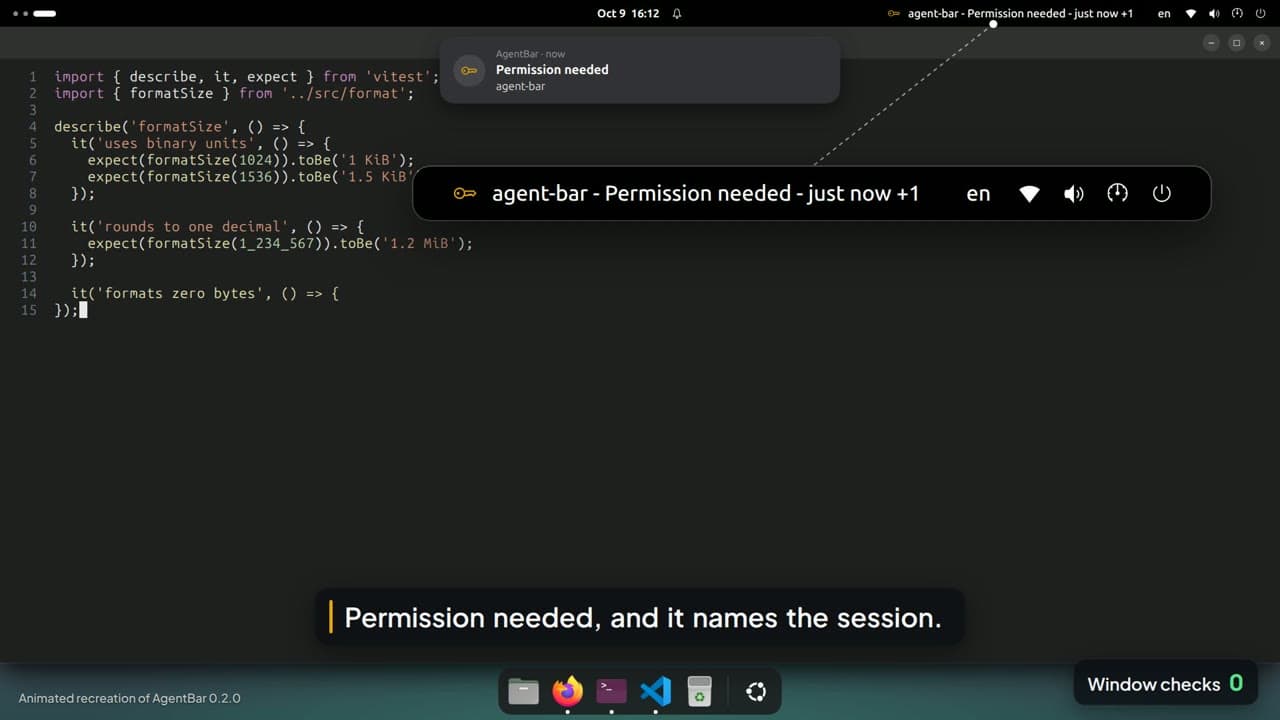
- →Local-first: no account, no server, no telemetry
- →Packaged for Ubuntu as a .deb installer
Automated registry generation engine for modern UI libraries, bridging the gap between source and discovery.
- →200+ npm downloads
- →Used by UI libraries
Framework-agnostic DSL for building clean, interactive tables with schema-driven architecture.
- →14k+ npm downloads
- →70% reduction in boilerplate
A Sanity Studio plugin that enables content creators to author complex, flexible tables using Structured Table Language (STL) with live preview support.
- →13k+ npm downloads
- →Enabled complex table layouts with row spans, column spans, header, footer, rich cells and more
Intelligent UI kit built on top of shadcn/ui with state-aware components and automated adaptation.
- →Zero-config installation flow
- →Live state visualization system
I don't build features first. I design systems.
- 01
Built to keep working
Clean code doesn't need babysitting. The PixEarn notification service ran for 4 months without me touching it.
- 02
Check before I guess
When a query timed out on a 6M-row table, the index wasn't the problem. The query was. I look at real numbers first, then fix.
- 03
Cheap to run
PixEarn handled 2.5M+ API requests a month on about $38 of infra. I care what my code costs to run.
- 04
I own the whole thing
UI, API, database, queues, deploy. When one person owns all of it, nothing gets lost in between.
Let's talk
Have a project or a role in mind? Or just want to talk systems? My inbox is open.